Father’s Day 2026 falls on Sunday, June 21, giving retailers a clear seasonal moment to help shoppers move from “I need a gift” to “this feels right,” especially as Father’s Day spending trends continue to show strong retail demand. This Father’s Day marketing guide starts with a simple truth: Father’s Day shoppers do not just need another discount. They need help finding something thoughtful, relevant, and on time. That matters because gift-giving often comes with pressure. Shoppers want to choose something that feels personal, useful, and appropriate for different father figures, from dads and grandfathers to partners, mentors, and chosen family. Broader gifting research shows that 62% of Americans prefer personalized gifts over costly store-bought items, while 68% say they get more satisfaction from giving a heartfelt gift than an expensive one.
For retailers, this is where personalization becomes more than a campaign tactic. Product recommendations, behavioral segmentation, timely reminders, and inclusive messaging can reduce decision fatigue and guide customers toward better choices. AI in retail customer engagement can support that process by surfacing relevant products, predicting intent, and automating the next best action. But the human story still matters. The strongest Father’s Day campaigns will use AI as a helper, not the whole strategy. This Father’s Day marketing guide shows how retailers can turn seasonal intent into more confident gift decisions.
Why Father’s Day is a bigger retail opportunity in 2026
Father’s Day is becoming a stronger retail moment, not just a small seasonal campaign. In 2025, U.S. According to NRF, Father’s Day spending was expected to reach a record $24 billion, up from $22.4 billion the previous year. This growth shows that shoppers are still willing to spend, especially when retailers help them find gifts that feel personal, meaningful, and useful.
For 2026, the opportunity is also about timing. Father’s Day sits between Mother’s Day, graduation season, summer shopping, and vacation planning, making it a valuable bridge between spring and early-summer retail activity. Since many brands see customer attention slow down as summer routines begin, this Father’s Day marketing guide shows how retailers can use the occasion to re-engage shoppers with personalized recommendations, experience-based gift ideas, delivery reminders, and inclusive messaging.
Why Father’s Day shoppers need more guidance, not more discounts
Father’s Day gives retailers a clear spending opportunity, but the shopper’s need is more emotional than transactional. People want a gift that feels useful, thoughtful, and right for the person they have in mind, especially when they are under time pressure or trying to avoid another generic gift. This is where this Father’s Day marketing guide encourages retailers to think beyond “dad” as one audience. Gift-givers may be children, partners, friends, relatives, or people buying for grandfathers, stepfathers, mentors, new dads, or other father figures, each with a different relationship, budget, and intent.
The strongest Father’s Day campaigns guide choice instead of simply promoting products. Retailers can organize gift discovery around interests, lifestyles, price points, delivery deadlines, and relationship types. They can use behavioral data to recommend relevant categories, remind shoppers before key cut-off dates, and create journeys that reduce decision fatigue. This Father’s Day marketing guide frames the campaign narrative clearly: the market opportunity is growing, the shopper problem is choice complexity, and the solution is smarter guidance. AI can support that guidance by helping retailers predict intent, personalize recommendations, and automate timely follow-ups, while platforms like ContactPigeon and Menura can turn those signals into connected campaigns across the customer journey.
The inclusive side of Father’s Day campaigns
Father’s Day can be a strong retail moment, but it can also be a sensitive one. Not every customer has the same relationship with the day, and for some, the occasion may feel complicated, emotional, or simply irrelevant. That does not mean retailers should avoid Father’s Day altogether. As this Father’s Day marketing guide highlights, it means campaigns need to be planned with more care, especially when brands are using personalization, automation, and repeated seasonal reminders.
A thoughtful starting point is the seasonal opt-out. Giving customers the option to pause Father’s Day emails or messages shows that personalization is not only about knowing what to send. It is also about knowing what not to send. This small choice can protect the customer experience, reduce negative sentiment, and build trust before the campaign even begins. It also signals that the brand understands different family structures and emotional contexts.
Retailers should also avoid narrow stereotypes. Not every father figure wants grilling tools, sports gear, gadgets, or whisky-themed gifts. Better campaigns organize recommendations around real interests, behaviors, budgets, and needs, rather than outdated assumptions. The goal is to make personalization feel thoughtful, not invasive. A customer should feel guided by the brand, not watched by it. This Father’s Day marketing guide shows that when retailers combine inclusive messaging with respectful data use, Father’s Day campaigns become more relevant, more human, and more commercially effective.
How AI personalization can turn Father’s Day traffic into better gift decisions
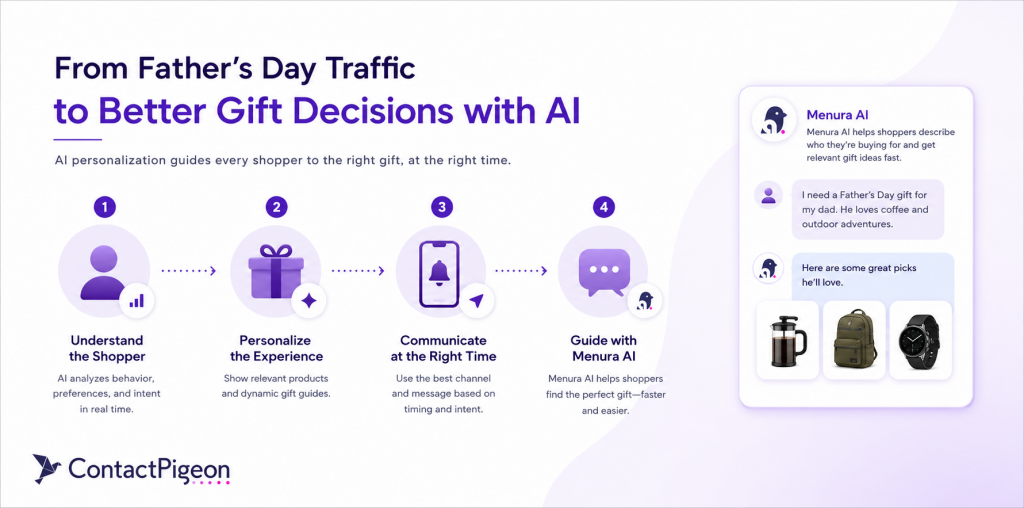
Father’s Day campaigns often bring more seasonal traffic, but traffic alone does not guarantee better results. Many shoppers arrive with only a loose idea of what they need: a gift for a dad who has everything, a partner who prefers practical items, a granddad with specific interests, or a father figure they want to thank in a meaningful way. As this Father’s Day marketing guide explains, AI personalization helps retailers turn that uncertainty into a clearer buying path by using customer behavior, product data, and real-time intent to guide shoppers toward better decisions.
Personalized gift recommendations
Personalized recommendations can help shoppers move faster from browsing to choice. Instead of showing every visitor the same Father’s Day products, retailers can use browsing behavior, purchase history, budget signals, and product affinity to suggest more relevant options. A shopper who has viewed premium skincare, for example, should not receive the same recommendations as someone browsing outdoor gear or affordable accessories. The goal is not to over-personalize, but to make the next step feel easier and more useful.
Dynamic gift guides
AI can also make gift guides more practical. Rather than creating one generic “Gifts for Dad” page, retailers can build dynamic guides around budget, urgency, interests, and shopper intent. This could include “under €50,” “last-minute gifts,” “for the wellness-focused dad,” “for the frequent traveler,” or “ready for delivery before Father’s Day.” These guides reduce decision fatigue and help shoppers find a relevant direction faster.
Smarter timing and channel selection
The best Father’s Day campaigns also match the message to the moment. Email can work well earlier in the journey, when shoppers are still looking for inspiration. SMS and push notifications are more useful closer to shipping cut-off dates, store pickup deadlines, or last-minute offers. On-site messages can support active browsers with reminders, product recommendations, or urgency-based prompts. AI can help decide when to communicate, which channel to use, and what message is most relevant.
AI shopping assistance
Shopping assistance adds another layer of guidance. With Menura AI, shoppers can describe who they are buying for, what the person likes, their budget, and when they need the gift. Instead of filtering through endless product pages, they can receive relevant, available recommendations more naturally. This turns Father’s Day discovery into a guided conversation, helping retailers support better gift decisions while keeping the experience personal, timely, and useful.
The Father’s Day personalization matrix: matching shopper intent to campaign response
The same Father’s Day campaign will not work for every shopper because each person comes with a different level of certainty, urgency, and emotional context. This matrix helps retailers match common shopper situations with the right type of guidance, from gift discovery and personalized recommendations to inclusive messaging and seasonal opt-out options.
| Shopper situation | What they need | Best campaign response |
|---|---|---|
| “I have no idea what to buy” | Guidance | Gift finder quiz or AI assistant |
| “I know the category, not the product” | Product comparison | Personalized recommendations |
| “I need it soon” | Urgency and convenience | SMS, push, delivery deadline, gift card |
| “I want something meaningful” | Story and relevance | Curated gift guide by interest |
| “I am buying for a father figure” | Inclusive language | Broader copy and flexible categories |
| “I do not want these messages” | Control | Seasonal opt-out |
Explore how Menura AI helps shoppers find the right gift faster.
Father’s Day campaign ideas retailers can use
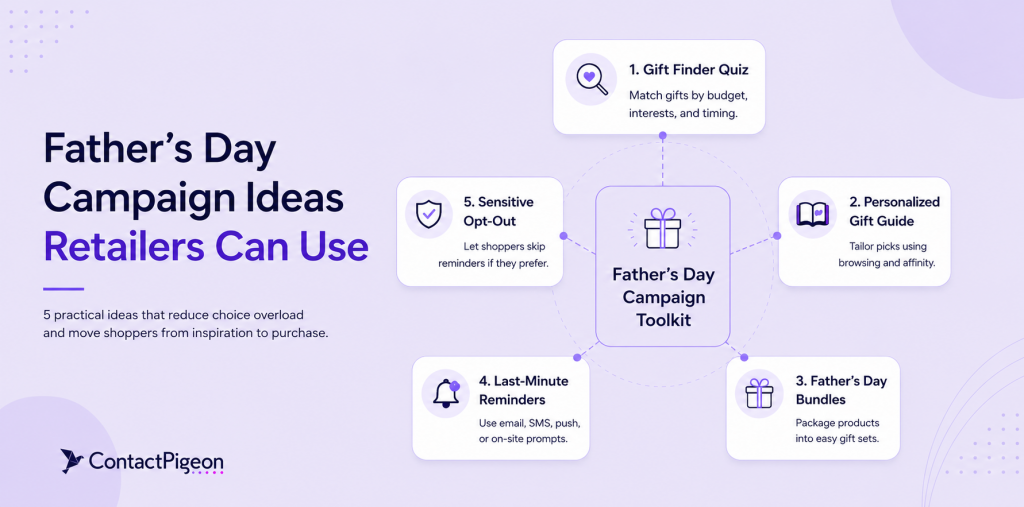
Retailers do not need dozens of Father’s Day campaign ideas to make the season work. As this Father’s Day marketing guide shows, they need a few practical campaigns that reduce choice overload, support different shopper needs, and move customers from inspiration to purchase. The strongest ideas combine relevance, timing, and empathy, instead of relying only on broad discounts.
Gift finder quiz
A gift finder quiz helps shoppers who know they need a gift but do not know where to start. Instead of sending them to a long product category page, retailers can ask a few simple questions about budget, relationship, interests, and delivery timing. For example, a fashion retailer could create a quiz that asks whether the gift is for a dad, granddad, partner, mentor, or father figure, then recommends options like everyday essentials, premium accessories, or last-minute gift cards.
Personalized gift guide
A personalized gift guide can make Father’s Day discovery feel more relevant. Rather than using a single generic “Gifts for Dad” page, retailers can tailor recommendations based on browsing behavior, past purchases, product affinity, or category interests. For example, a wellness retailer could show supplements, skincare, or self-care bundles to shoppers who recently browsed health-related products, while showing outdoor or fitness gifts to customers with different behavioral signals.
Father’s Day bundles
Bundles work well because they turn separate products into a more complete gift. They also help retailers increase perceived value without depending only on price cuts. For example, a grooming brand could create a “Weekend Reset” bundle with skincare, fragrance, and travel-size products. At the same time, a food retailer could offer a curated “Father’s Day breakfast box” with premium coffee, snacks, and personal add-ons.
Last-minute gift reminders
Many Father’s Day shoppers wait until the final days before making a purchase, so timing is critical. Retailers can use email earlier for inspiration, then SMS, push, or on-site messages closer to delivery cut-off dates. For example, a retailer could send a reminder saying, “Still looking for a Father’s Day gift? Order by tonight for delivery before Sunday,” followed by a gift card option for shoppers who miss the deadline.
Sensitive opt-out campaign
A seasonal opt-out campaign shows customers that the brand understands Father’s Day may not be relevant or comfortable for everyone. This is especially important when campaigns include multiple reminders across channels. For example, a retailer could send a short message before the campaign begins: “We know Father’s Day can be sensitive. If you prefer not to receive reminders this year, you can opt out here.” This gives customers control while protecting trust.
A simple Father’s Day 2026 campaign timeline
A successful Father’s Day campaign needs more than one message sent a few days before the holiday. Retailers should build momentum gradually, moving from early inspiration and opt-out options to personalized recommendations, urgency-led reminders, and post-purchase follow-up.
| Timing | Campaign focus | Recommended action |
|---|---|---|
| Late May | Launch gift guide and opt-out | Introduce Father’s Day messaging early, offer a seasonal opt-out, and start building awareness. |
| Early June | Personalized recommendations | Use browsing, purchase history, and product affinity to suggest relevant gifts by interest or budget. |
| Mid-June | Bundles, offers, delivery reminders | Promote curated bundles, highlight bestsellers, and remind shoppers of delivery cut-off dates. |
| Final week | SMS, push, gift cards, local pickup | Shift to urgency-led messages with last-minute options, digital gift cards, and pickup availability. |
| After Father’s Day | Thank-you, reviews, retention | Follow up with review requests, thank-you messages, and personalized next-purchase recommendations. |
How ContactPigeon helps retailers build better Father’s Day campaigns
A stronger Father’s Day campaign starts with better customer data. As this Father’s Day marketing guide explains, ContactPigeon helps retailers turn seasonal intent into connected journeys by combining customer segmentation, omnichannel automation, on-site personalization, and AI-powered product recommendations in one campaign strategy. Instead of sending the same Father’s Day message to every shopper, retailers can segment audiences based on behavior, purchase history, product interest, engagement level, and lifecycle stage. This makes it easier to identify shoppers who need inspiration, customers who are close to purchase, and last-minute buyers who need urgency-led reminders.
From there, ContactPigeon enables retailers to activate these segments across email, SMS, push notifications, and on-site messages. A shopper browsing gift ideas can receive personalized product recommendations on-site, followed by an email gift guide, then a deadline reminder through SMS or push as Father’s Day approaches. This keeps the campaign consistent without making it feel repetitive.
AI-powered product recommendations can also help retailers surface gifts that match each shopper’s intent, budget, and browsing behavior. With Menura AI, the experience can become even more guided. Shoppers can describe who they are buying for, whether that is a dad, granddad, partner, mentor, or father figure, and receive relevant, available gift suggestions. As this Father’s Day marketing guide shows, the value for retailers is simple: Father’s Day campaigns become more targeted, timely, and helpful because they are connected to real customer data, not generic seasonal assumptions.
Turning Father’s Day intent into confident gift choices
Father’s Day 2026 gives retailers more than a seasonal sales moment. As this Father’s Day marketing guide highlights, it is a chance to help shoppers make better, more thoughtful decisions in a period where relevance, timing, and trust matter. The strongest campaigns will not rely only on discounts or generic “gifts for dad” messaging. They will guide customers through the decision, from early inspiration to last-minute reminders, with personalized recommendations, inclusive language, and useful support across every channel.
That is where ContactPigeon and Menura AI can help retailers turn seasonal traffic into smarter, connected journeys, powered by customer data, automation, and guided shopping experiences.