As we move into 2026, retail and ecommerce are entering a more mature phase of digital transformation. The past five years were defined by acceleration: pandemic-driven ecommerce growth, rapid experimentation with automation, and a generative AI breakthrough that reshaped how businesses think about customer interaction. The next phase is different. It is less about experimentation and more about execution, integration, and measurable return on investment.
Conversational commerce goes mainstream with AI assistants, chatbots & voice shopping

2026 will mark the maturation of conversational commerce, with chatbots evolving from basic Q&A to full-fledged shopping concierges. Voice and agentic AI will shorten the path from product discovery to purchase, especially in North America where big-box retailers are investing heavily. Europe is following suit, albeit with a keener eye on privacy and compliance. The retailers that leverage AI assistants to make shopping “as easy as a conversation”, while maintaining data ethics and a human touch, will have a strong competitive edge.
Surging adoption of AI chatbots and personal AI shopping agents
Retail analysts predict that one-quarter of shoppers will use AI-powered chatbots when shopping in 2026. The concept of “agentic commerce”, enabled by AI agents like Menura AI, is emerging. Rather than just offering advice, advanced AI agents will take actions on behalf of users, even completing purchases. In fact, about one-third of U.S. consumers say they would let an AI make purchases for them, and nearly a third have already used ChatGPT to assist with buying decisions. This zero-click purchasing paradigm could redefine online shopping, shifting traffic away from traditional websites toward AI-driven transactions.
Voice commerce and ambient shopping
Expect voice AI and ambient computing to blend into retail experiences. From smart speakers reordering household staples to connected cars enabling drive-thru voice orders, commerce will become “neural”, embedded in daily life through IoT and voice.
Enhanced personalization & trust
Conversational commerce will also drive hyper-personalization. AI chatbots armed with customer data can give tailored product suggestions, upsell/cross-sell intelligently, and even handle returns or FAQs with personal context. Retailers that excel at personalization have seen up to 40% revenue lift, and this will extend to conversational channels.
Retail automation: Robots, cashierless stores & AI-powered operations
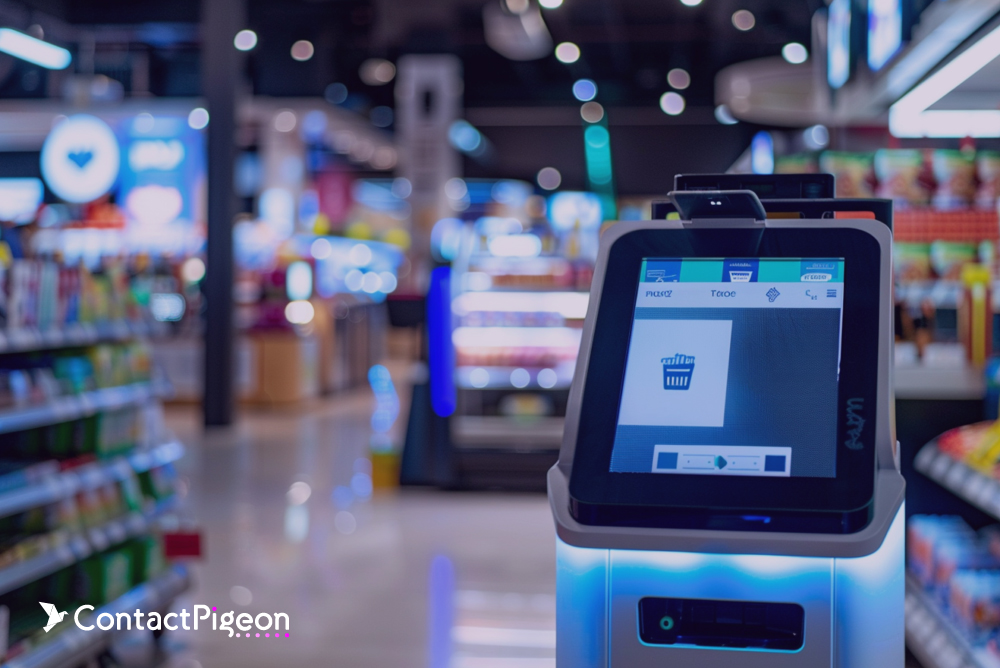
In summary, 2026 retail automation is about creating smarter stores and supply chains. Shoppers in North America and Europe will increasingly encounter frictionless, self-service experiences and see the benefits of better-stocked shelves and faster delivery – much of it thanks to AI and robotics working quietly in the background. The winners will be retailers who combine these efficiencies with a human touch, using automation to enhance service quality rather than merely to cut costs.
Cashierless stores go mainstream
The “just walk out” experience popularized by Amazon Go is moving from experimentation to broader adoption, making frictionless, cashierless shopping increasingly common (lsretail.com). By 2026, fully autonomous retail environments are expected to be viable for large-scale deployment (medium.com).
In-store robotics and IoT
Automation is extending well beyond checkout. Retailers are deploying robots and smart devices to manage routine in-store tasks such as inventory checks and pricing accuracy. Shelf-scanning robots and smart shelves powered by RFID, weight sensors, and cameras enable real-time stock visibility, proactive replenishment, and shopper behavior analysis. McKinsey reports that smart shelf technology can reduce out-of-stock incidents by up to 30% and cut manual inventory checks by nearly 40%.
Predictive inventory, & supply chain AI
Retail operations are becoming more resilient through AI-driven demand forecasting. By analyzing historical sales, seasonality, local events, weather patterns, and social signals, AI enables retailers to anticipate product demand with greater precision, improving availability while reducing overstock and supply chain inefficiencies.
Warehouse automation & micro-fulfillment
Micro-fulfillment centers are gaining momentum as retailers prioritize same-day delivery and efficient store pickup. This market is projected to reach $43.5 billion by 2029, growing at a 46.8% CAGR. Major grocery chains in the U.S. and Europe, including Kroger with Ocado and Carrefour’s urban fulfillment hubs, are investing in compact, robot-powered facilities to meet rising expectations for speed and convenience.
Efficiency and labor dynamics
Automation is increasingly driven by labor shortages and rising costs. In the U.S., robots and AI are helping offset staffing challenges for repetitive tasks, while in Europe automation supports productivity gains amid higher labor costs and stricter regulations. In-store automation technologies, spanning robotics and IoT, are projected to become a $70+ billion global market by the early 2030s, highlighting their growing role in retail operations.
Ecommerce: DTC, marketplaces, mobile & consumer trends

Ecommerce in 2026 is a story of more: more sales, more channels, and more customer expectations. Consumers in North America and Europe will expect to shop anytime, anywhere, whether via a phone, a social feed, or talking to an AI, and receive their purchase quickly. They also expect brands to stand for something (sustainability, authenticity) in exchange for loyalty. Retailers that innovate with AI-driven personalization, diversify their channel strategy (DTC, marketplace, social), and uphold values of convenience and conscience will thrive in the ever-expanding online marketplace.
Continued growth of online sales
Global ecommerce continues its upward trajectory. Worldwide online retail sales are projected to approach $7.5–8 trillion by 2026, up from $6.3 trillion in 2024. By 2027, ecommerce may exceed $8 trillion, representing roughly 24% of total global retail sales.
Mobile commerce dominance
Mobile shopping is firmly established as the primary ecommerce channel, especially among younger consumers. By 2025, 59–70% of global online retail sales are expected to come from mobile devices, representing $4 trillion or more in mobile-driven commerce.
Direct-to-Consumer (DTC) vs. marketplaces
DTC models continue to expand as brands seek higher margins and closer customer relationships. At the same time, marketplaces like Amazon, eBay, Zalando, and Otto remain dominant due to scale and convenience. However, AI-driven shopping assistants may begin eroding Amazon’s marketplace dominance by 2026 (emarketer.com), reshaping how consumers discover and purchase products.
Social commerce & new channels
Social platforms are becoming primary shopping destinations. The number of U.S. social shoppers increased from 96 million in 2023 to 104 million in 2025, and by 2026 platforms like TikTok (projected ~40 million U.S. buyers), Instagram, YouTube, and Pinterest will have fully matured commerce capabilities.
Notably, 43% of Gen Z consumers now begin product searches on TikTok or other social platforms rather than Google or Amazon (akeneo.com). Live commerce is also accelerating, with global livestream sales growing at over 30% CAGR and delivering 10–30% conversion rates, far higher than traditional ecommerce. User-generated content continues to outperform brand-led messaging, with reviews and viral trends driving rapid sell-outs.
Hyper-personalization & AI in ecommerce
Personalization remains a core competitive differentiator, with hyper-personalization in retail driving measurable revenue lift.. Retailers leading in personalization achieve up to 40% higher revenue. AI-powered recommendations are already influential, with 49% of Americans saying AI recommendations affect purchases and 64% willing to buy products suggested by generative AI.
Visual search and AR adoption is accelerating. By 2026, 91% of Gen Z shoppers express interest in AR shopping experiences, while retailers report conversion rate improvements of up to 94% from 3D and AR product visualization.
Consumers values sustainability & ethics
Sustainability and ethics increasingly influence purchasing decisions. 73% of Gen Z shoppers worldwide say they would change consumption habits to reduce environmental impact. By 2026, resale and recommerce programs are becoming mainstream, with initiatives like IKEA’s buy-back program expanding globally and luxury brands partnering with resale platforms.
Regulation is reinforcing this shift, particularly in Europe. The EU’s Digital Product Passport (DPP) launches in 2026–2027, requiring transparency around materials, origin, and environmental impact (akeneo.com). Once consumers experience this level of visibility, expectations for transparency are unlikely to reverse.
Fast & flexible fulfillment
Delivery speed and flexibility are critical differentiators. The global same-day delivery market is projected to exceed $330 billion by 2032, with same-day and instant delivery expanding across North America and Europe through couriers, automation, and emerging technologies.
BOPIS and curbside pickup remain essential omnichannel services, with retailers refining pickup experiences and expanding into BORIS (Buy Online, Return In Store) by 2026. Cross-border ecommerce is also becoming smoother, driven by improved logistics, clearer duties, and stronger international fulfillment capabilities, raising expectations for global delivery speed and transparency.
Brick-and-mortar retail reimagined
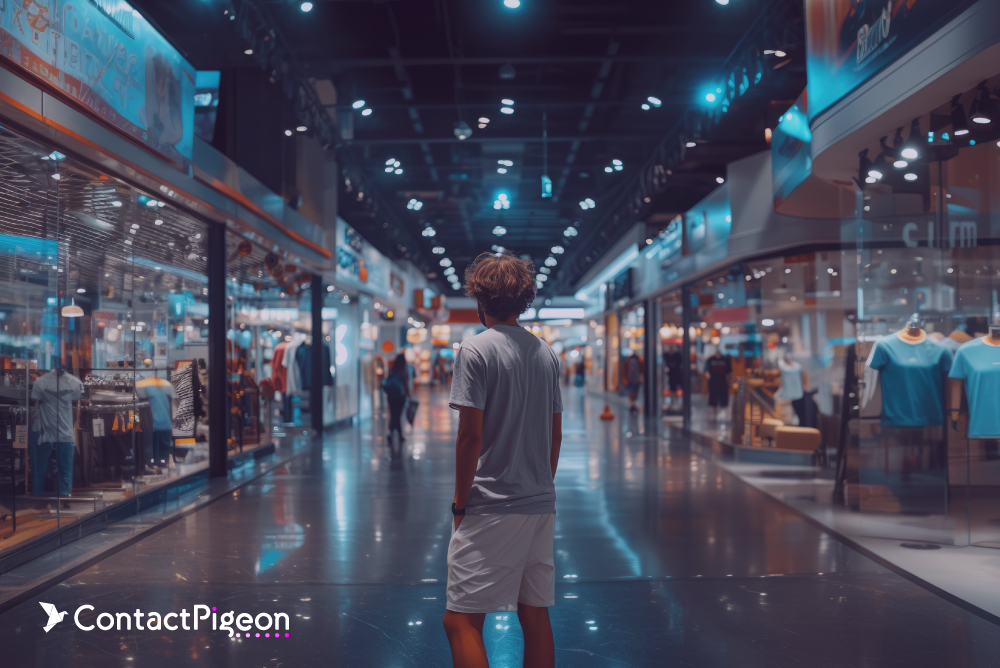
Physical retail still satisfies core human preferences that digital struggles to match: the immediacy of taking an item home, the tactile and sensory experience, and social interaction. By 2026, brick-and-mortar stores will serve new roles as experience centers, fulfillment hubs, and vital touchpoints in an omnichannel strategy. Key trends defining the future of stores:
Experiential retail & “retailtainment”
Stores are increasingly designed to be immersive destinations rather than just points of sale. To lure shoppers off their couches, retailers are turning stores into places where customers can do things, try products, attend events, or simply have fun. We see:
- Interactive and high-tech experiences: By 2026, many stores will feature AR/VR and interactive displays to engage shoppers. These elements “turn visits into events” and boost both loyalty and conversion rates.
- Showrooms and flagships: Brands are opening flagship stores that function as showrooms – you may not walk out with a product, but you can test and order it for delivery.The pop-up retail market itself is growing (projected from $95B in 2025 to $144B by 2032 globally) as brands use short-term themed stores to create buzz (e.g. a holiday popup or an Instagrammable installation).
- Entertainment and leisure: The concept of “retailtainment”, merging retail with entertainment, will be more prevalent. Mall operators add attractions like indoor ski slopes, esports arenas, or live music venues to drive footfall. Stores might host yoga classes (as Lululemon does) or craft workshops (as some IKEA locations have tried) to provide experiences you simply can’t get online.
Phygital integration in-store
Successful brick-and-mortar stores will blend digital conveniences into the physical space, making shopping seamless:
- Mobile-enabled shopping: In 2026, nearly 3 in 4 shoppers routinely move across online and offline channels during their purchase journey, so stores will be equipped to serve those who research on the fly.
- Smart store infrastructure: A phygital store might recognize a loyalty customer upon entrance (via a QR code scan, an app or facial recognition) and tailor offers on digital displays in real time.
- Assisted selling & clienteling: Sales associates in 2026 will be armed with data. Many retailers equip staff with clienteling apps or AI “copilots” on tablets or smart glasses, which can pull up a shopper’s past purchases, preferences, and even suggest items to upsell. This turns store staff into proactive advisors rather than reactive clerks.
- Omnichannel service (BOPIS/BORIS): Physical outlets double as convenient pickup and return points for online orders. Returns are also being streamlined: you might drop off an online return at a store counter or even at a network of return kiosks, no box or label needed.
Stores as hybrid “hub” locations
Traditional retail square footage is being repurposed in innovative ways:
- Micro-fulfillment and dark stores: Some backrooms or entire store locations (especially in high-density cities) are being converted into micro-fulfillment centers to process online orders fast. A portion of a supermarket might be cordoned off for staff or robots to pick items for delivery, or retailers may open “dark stores”, stores closed to public that serve as delivery hubs. By 2026 more retailers will embrace this to meet demand for instant delivery while optimizing store inventory usage.
- Community and service hubs: Some brick-and-mortar locations are morphing into community spaces or service centers. For instance, Best Buy in the US shifted to offer more in-store tech support and consultation (Geek Squad), hosting workshops, etc., positioning itself “as more than a store, a destination for expertise and community”.
Omnichannel and “phygital” strategies
By 2026, the line between online and offline retail will all but vanish from the customer’s perspective, accelerating the shift toward phygital retail experiences. Omnichannel retail, providing a unified experience across store, web, mobile, and beyond, is the default expectation. Retailers are implementing “phygital” (physical+digital) strategies to engage customers on every touchpoint as one continuous journey:
Unified customer journey
Shoppers increasingly move fluidly across channels. It’s common to discover a product on social media, check it out on a brand’s website, see it in person at a store, and then purchase via a mobile app. In fact, 73% of shoppers routinely use multiple channels before completing a purchase. Retailers in 2026 will ensure that these transitions are frictionless. The goal is a single view of the customer and consistent pricing, inventory, and branding across all channels.
Real-time inventory visibility
A cornerstone of omnichannel is letting customers know exactly what’s available where. Retailers are investing in systems that give real-time inventory visibility across all stores and warehouses. So a shopper can see online if the sweater they want is “In stock at your local store (in size M)” or how fast it can ship from other locations. In 2026, more retailers will offer features like “ship from store” or “order in-store for home delivery”, effectively pooling inventory to fulfill demand from anywhere.
Cross-channel loyalty programs
Omnichannel loyalty programs are being revamped to encompass both digital and physical engagement.Starbucks’ rewards app (highly successful in North America and launching in Europe) lets you order ahead (digital) and pick up in store (physical) while earning points regardless. Many retailers are enhancing loyalty schemes with omnichannel perks, points for online engagement in addition to purchases, and rewards that can be redeemed both online or in-store.
Phygital marketing & new “surfaces”
The blending of digital and physical also extends to marketing. Digital signage and augmented reality in physical spaces create new advertising “surfaces.” European retailers at tech expos have demoed such concepts to “boost retail with AV tech, AI and gamification”. Also, the concept of “new digital surfaces” mentioned in forecasts refers to channels like smart home devices, in-car dashboards, or wearables becoming commerce-enabled.
Immersive spaces and Metaverse
The predictions mention “immersive spaces” and “metaverse platforms” as part of retail’s future, but these will likely play a supporting role to the more immediate AI and omnichannel trends. Still, luxury and trend-setting brands in North America and Europe may use VR/AR to create buzzworthy experiences.
The 2026 strategy: Intelligence, integration, and immersion
The defining characteristic of retail and ecommerce in 2026 is how deliberately technology is applied. AI, automation, and omnichannel capabilities are widely available. What differentiates leaders is their ability to integrate these tools into a coherent strategy that improves performance while strengthening customer trust.
Winning retailers will prioritize intelligence over experimentation, integration over fragmentation, and immersion over transaction. They will use AI to remove friction, not add complexity. They will connect physical and digital channels into a single operating model. And they will design experiences that respect the customer’s time, attention, and data.