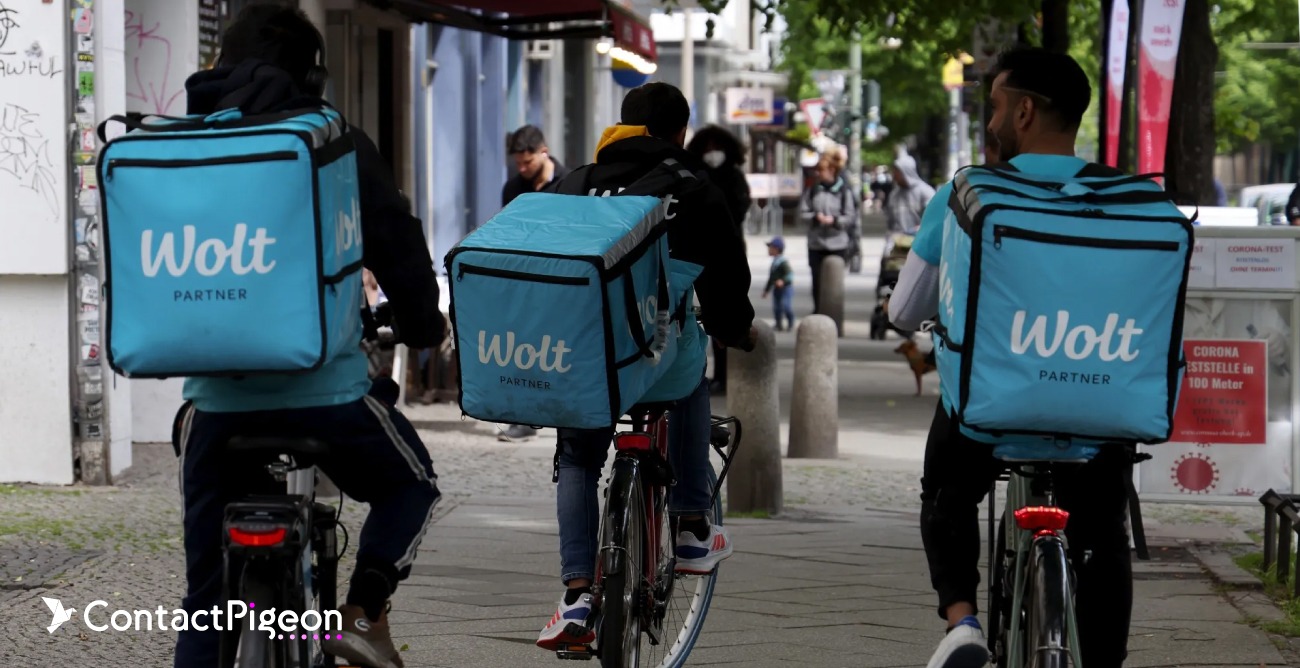
Wolt has evolved from a single-city food delivery startup into a multi-country marketplace operating at the intersection of on-demand delivery, e-commerce, and retail media—where hyper-personalization in retail becomes a core growth lever, not a nice-to-have. Its trajectory offers more than a growth story. It provides a structural case study in how modern retail platforms align marketplace economics, subscription models, and multi-vertical expansion to build defensible scale. This case study examines Wolt through a strategic lens: performance signals, business model logic, omnichannel architecture, growth engines, and eCommerce execution. Rather than focusing on campaigns or surface-level tactics, we analyze the Wolt marketing strategy and the underlying systems that drive frequency, monetization, and operating leverage.
For retail leaders navigating margin pressure, channel fragmentation, and rising customer acquisition costs, Wolt’s evolution offers a timely question: what happens when marketing, product, and marketplace economics are designed as one integrated growth engine rather than separate functions?
- Scale is structural, not seasonal. Wolt’s trajectory signals a shift from footprint-led growth to platform-scale leverage once multi-country density is reached.
- Retention is engineered through membership. Subscription penetration (DashPass + Wolt+) is disclosed as a platform-level frequency lever post-acquisition.
- Category expansion increases order occasions. “New verticals” adoption is tracked at the MAU level, indicating systematic cross-category behavior building.
- Monetization diversified beyond take rate. DoorDash + Wolt Ads are disclosed as a scaled revenue stream, reducing reliance on commissions alone.
- Marketplace growth meets regulatory limits. Competition and consumer enforcement actions show that contract terms and compliance can become material constraints.
Performance timeline of Wolt
Geographic footprint of Wolt (2014–2024)
Geographic footprint of Wolt: Countries and cities (2021–2024)
Shows disclosed footprint expansion in countries and cities at key milestones.
Note: “300+ cities” is shown as a minimum threshold for 2023.
Between 2021 and 2024, Wolt expanded its operating footprint from 23 to 28 countries, adding five new markets. During the same period, Wolt’s brand reached 129 cities, 1,500 stores, and 30.000 restaurants. The acceleration is particularly visible between 2023 and 2024, when its coverage included over 300+ cities.
This matters because it marks the transition from early-stage geographic rollout to multi-country scale. Once coverage reaches this level of density, executive focus typically shifts from footprint expansion to unit economics, operational efficiency, and monetization depth.
International revenue under DoorDash reporting (2022–2024, USD)
International revenue under DoorDash reporting (2022–2024, USD m)
Shows DoorDash-reported international revenue, which includes Wolt markets post-2022 acquisition.
Data note: Standalone Wolt revenue is not disclosed post-2022; international revenue is reported at DoorDash level.
Following Wolt’s acquisition in 2022, financial reporting has been consolidated under DoorDash’s international segment, and standalone Wolt revenue is not publicly disclosed. Within this reporting structure, international revenue increased from USD 332 million in 2022 to USD 854 million in 2023, representing growth of USD 522 million or 157 percent year over year. Growth continued into 2024, with revenue rising from USD 854 million to USD 1,319 million, an increase of USD 465 million or 54 percent year over year.
These figures quantify the scaling trajectory of the international business in which Wolt operates as the primary brand across many European markets. They also show a normalization of growth rates as the base expands, which is typical for marketplace platforms moving from expansion to operational leverage.
Marketplace Gross Order Value (GOV) under DoorDash reporting (2022–2024, USD)
Marketplace GOV under DoorDash reporting (2022–2024, USD bn)
Shows total Marketplace Gross Order Value for DoorDash marketplaces, which include Wolt geographies post-2022.
Definition note: Marketplace GOV is defined by DoorDash and includes DashPass and Wolt+ membership fees.
Marketplace Gross Order Value, as reported by DoorDash and defined to include both DashPass and Wolt+ membership fees, increased from USD 53,414 million in 2022 to USD 66,771 million in 2023. This represents a year-over-year increase of USD 13,357 million, or 25 percent. In 2024, Marketplace GOV rose further to USD 80,231 million, adding USD 13,460 million year over year, equivalent to 20 percent growth.
This metric provides context for the total transactional scale of the combined marketplace system in which Wolt operates post-acquisition. The shift in growth rate from 25 percent to 20 percent year over year signals a gradual moderation as scale increases, offering executives a clearer view of platform maturity and growth normalization.
Disclosure note
Wolt does not publish full, standalone, multi-year financial statements covering the period from 2014 to 2025. After the 2022 acquisition, Wolt’s financials have been consolidated within DoorDash’s reporting. As a result, the most comparable, audited, and chart-ready multi-year metrics available publicly are DoorDash’s international revenue and Marketplace GOV for the 2022–2024 period.
Business model decoded: The Wolt marketing strategy explained
| Dimension | Wolt reality | Evidence / source |
|---|---|---|
| Core value proposition | On-demand delivery of restaurant meals and retail goods via local merchant partnerships. | DoorDash Form 10-K (FY2024); Wolt corporate disclosures. |
| Assortment model | Third-party marketplace model across restaurants and retail partners. | DoorDash Form 10-K (FY2024). |
| Primary revenue streams | Marketplace commissions, consumer fees, and advertising revenue within DoorDash’s consolidated reporting. | DoorDash Form 10-K (FY2024). |
| Cost intensity | Key cost categories include logistics-related costs, incentives, sales and marketing, and platform development. | DoorDash Form 10-K (FY2024). |
| Key constraints | Exposure to regulatory and marketplace risks (including labor and local delivery regulation) across multiple jurisdictions. | DoorDash Form 10-K (FY2024), Risk Factors. |
Wolt operates a multi-sided marketplace connecting consumers, merchants, and courier partners across on-demand food and retail categories, monetized through transaction-based fees and advertising services. The core economic lever in the Wolt marketing strategy is marketplace scale, which drives order density, commission revenue, and operating leverage within DoorDash’s international segment.
Value creation logic
- Customer value driver: On-demand access to local restaurants and retail inventory through a single marketplace platform; DoorDash reports 37M+ Monthly Active Users globally in FY2024, reflecting demand scale across markets, including Wolt geographies. (DoorDash FY2024 10-K)
- Assortment logic: Asset-light marketplace model aggregating third-party supply; no inventory ownership disclosed, reducing working capital exposure relative to vertically integrated retail models. (DoorDash FY2024 10-K)
- Differentiation vs peers: Operates across food delivery and retail categories, including grocery and convenience; DoorDash reports expansion beyond restaurants into non-restaurant categories as a structural growth pillar. (DoorDash shareholder communications, 2023–2024)
Value capture & economics
- Margin signal: DoorDash International segment (which includes Wolt) achieved positive Adjusted EBITDA in 2023, after prior operating losses during expansion years. Standalone Wolt margins are not publicly disclosed. (DoorDash FY2023 shareholder letter)
- Major cost drivers: Cost of revenue includes courier payments and payment processing; operating expenses include sales & marketing and research & development. (DoorDash FY2024 10-K)
- Volume leverage: Marketplace GOV increased from USD 53.4bn (2022) to USD 80.2bn (2024), improving platform-scale economics; commission-based revenue grows with transaction volume rather than owned inventory turnover. (DoorDash FY2024 10-K)
Scale effects & structural advantages
- Scale advantage: Multi-country footprint (28 countries as of 2024) increases merchant density and brand recognition across European markets. (Wolt corporate disclosures, 2024)
- Operational leverage signal: International revenue grew from USD 332m (2022) to USD 1.3bn (2024), indicating scale expansion post-acquisition under consolidated reporting. (DoorDash FY2024 10-K)
- Defensibility: Marketplace network effects between consumers, merchants, and couriers; structural moat based on liquidity and local density. (Marketplace structure disclosed in DoorDash filings)
Structural limits & trade-offs
- Capital intensity: While asset-light on inventory, the model requires ongoing platform investment and courier subsidies; research & development and sales & marketing remain material expense categories. (DoorDash FY2024 10-K)
- Growth constraints: Regulatory risks related to courier classification and local delivery regulation across European jurisdictions. (DoorDash FY2024 10-K Risk Factors)
- Profitability vs growth tension: International segment moved from expansion-driven losses to positive Adjusted EBITDA post-2023, reflecting a shift toward efficiency; standalone Wolt’s profitability metrics are not publicly disclosed.
Omnichannel architecture: Wolt’s online-to-offline retail strategy
| Layer | Wolt implementation | Evidence / source |
|---|---|---|
| Sales channels | Consumer ordering via Wolt app and web, merchant-side operations via Wolt Merchant tooling, and last-mile delivery via Wolt Drive for eligible partners. | Wolt Developer documentation (Marketplace and Wolt Drive). |
| Inventory model | Decentralized inventory at merchant venues; retail partners can update pricing, availability, and item visibility via supported integration paths. | Wolt Developer documentation (Retail integrations). |
| Fulfillment options | Marketplace flow where merchants prepare orders and delivery is executed via Wolt courier partners; Wolt Drive supports delivery for orders placed on merchant-owned channels. | Wolt Developer documentation (Marketplace and Wolt Drive). |
| Customer identity | Account-based identity anchored in the Wolt consumer account and governed by Wolt privacy terms. | Wolt privacy statement / trust center. |
| Key constraints | Integration and data synchronization depend on merchant system readiness and identifier mapping (for example, item identifiers). | Wolt Developer documentation (Menu and retail guidance). |
The Wolt marketing strategy and omnichannel intent are to convert online demand (app or merchant checkout) into offline fulfillment executed by third-party merchants and courier partners, not Wolt-owned stores—a practical example of phygital retail where digital discovery and physical execution operate as one connected journey. In the Wolt retail strategy, the architectural backbone is a decentralized inventory network (merchant venues and, in some markets, Wolt Market dark stores) connected via marketplace order flows and optional merchant integrations.
Channel & inventory connectivity
- Inventory model: Retail partners can update prices, discounts, inventory, and item visibility through API or SFTP integrations, indicating inventory remains distributed at the merchant level rather than centralized by Wolt.
- Fulfillment paths enabled: In Wolt Marketplace, orders placed on Wolt are received by the merchant venue, prepared/packed, and then delivered by a Wolt courier partner or the merchant’s own courier.
- Limits/exceptions: Retail integrations support ongoing updates but do not allow creating an assortment (assortment setup is handled via onboarding), which constrains self-serve merchandising control via API alone.
Customer identity & data continuity
- Identity linkage mechanism: Wolt acts as a controller for users placing orders through an account in the Wolt App, which anchors identity to an app account rather than a store loyalty ID.
- Cross-channel recognition capability: The privacy statement explicitly references storing partner-specific bonus card/loyalty programme participation “if applicable,” indicating support for attaching certain partner identifiers to the user profile in some markets.
Order orchestration & fulfillment logic
- Routing logic (disclosed): Wolt Marketplace is defined as: consumer order → merchant venue receives order → merchant prepares/packs → courier pickup and delivery. This describes venue-led fulfillment with courier dispatch after preparation.
- Store vs DC prioritization: Wolt’s model is primarily store/venue-node fulfillment (restaurants, grocery stores, supermarkets). Any centralized fulfillment (for example, Wolt Market dark stores) exists but is not described as the universal default across all markets.
- Scalability/latency signals: Wolt’s developer documentation notes asynchronous processing for menu/item updates and recommends delta updates for retail assortment management, implying integration design must tolerate non-instant propagation.
Architectural trade-offs
- Speed vs complexity: Decentralized inventory with many merchant systems can support broad physical supply coverage, but requires ongoing data synchronization (inventory/price/visibility) across heterogeneous stacks.
- Cost vs flexibility: Wolt Drive shifts checkout, payments, and customer service to the merchant while Wolt supplies delivery capacity, structurally separating “commerce stack” from “logistics stack.”
- Dependency risks: Integration reliability depends on merchant data quality and identifier mapping (SKU/GTIN/external_id), and some retail capabilities (assortment creation) remain onboarding-led rather than fully API-native.
Analysis of Wolt’s growth marketing strategy
| Growth engine | Objective | Primary KPIs | Latest disclosed signal | Owner | Evidence / source |
|---|---|---|---|---|---|
| Subscription membership (DashPass + Wolt+) | Retention and higher order frequency | Members (count) | Members increased from 18m+ to 22m+ exiting 2023 to exiting 2024 (minimum +4m+, +22%+). | Subscriptions / Growth | DoorDash FY2024 earnings release / shareholder materials (2025-02-11). |
| New verticals adoption | Cross-category usage expansion | % of MAUs ordering from new verticals | Share of MAUs ordering from new verticals increased from 20% to 25% (Dec 2023 to Dec 2024, +5pp). | New Verticals / Growth | DoorDash FY2024 earnings release / shareholder materials (2025-02-11). |
| Platform demand scale | User growth and reactivation | MAUs (count) | MAUs increased from 37m+ to 42m+ (Dec 2023 to Dec 2024, minimum +5m+). | Growth / Product | DoorDash FY2024 earnings release / shareholder materials (2025-02-11). |
| Retail media monetization (DoorDash + Wolt Ads) | Monetize merchant and brand demand | Advertising run-rate (USD) | DoorDash stated DoorDash + Wolt Ads surpassed a USD 1bn annualized run-rate in 2024. | Ads / Monetization | DoorDash corporate announcement (2025-06-16). |
The Wolt marketing strategy (post-2022 within DoorDash reporting) is anchored on subscription penetration, category expansion, and an ads business that monetizes merchant demand—exactly the kind of environment where AI agents can guide discovery, reduce friction, and drive conversion (see Menura AI Agent).
Subscription membership (DashPass + Wolt+)
- Membership scale: DashPass + Wolt+ members increased from 18m+ (exiting 2023) to 22m+ (exiting 2024) (minimum +4m+, +22%+).
- Demand linkage: Same release reports MAUs 42m+ (Dec 2024), indicating subscription is operating at platform scale.
- In short: Subscription is the primary disclosed retention lever at scale.
Category expansion into “new verticals”
- Penetration: Share of MAUs ordering at least one “new verticals” category increased from 20% (Dec 2023) to 25% (Dec 2024) (+5pp).
- Scale context: This is reported on a base of 42m+ MAUs (Dec 2024)
- In short: Cross-category adoption rose measurably over 2024.
Paid marketing spend intensity (consolidated DoorDash reporting)
- Spend level: GAAP sales & marketing expense was USD 541m in 2024-Q4, +18% YoY; the increase was “primarily” driven by advertising expense.
- Efficiency proxy: Sales & marketing expense was 2.5% of Marketplace GOV in 2024-Q4, down from 2.6% in 2023-Q4.
- Mechanics disclosed: S&M includes advertising, brand marketing, and consumer referral credits (as described in filings).
- In short: Paid growth scaled while S&M intensity stayed ~flat to down.
Retail media monetization (DoorDash + Wolt Ads)
- Revenue signal: DoorDash states that DoorDash and Wolt Ads crossed an annualized advertising revenue run rate of >USD 1bn in 2024.
- Platform coverage: Claim is stated for 30+ countries where DoorDash operates, which includes Wolt geographies.
- In short: Ads is a disclosed monetization engine at >$1bn run-rate.
Platform demand scale (MAUs)
- User growth: MAUs reached 42m+ in Dec 2024, up from 37m+ in Dec 2023 (minimum +5m, ~+13.5%).
- Composition: Metric is defined by DoorDash as accounts that completed an order in the past month (filing definition).
- In short: Demand-side scale increased materially during 2024.
Merchant acquisition via referral incentives (supply-side growth)
- Incentive level: Wolt offers up to EUR 500 per merchant referral under its merchant referral program (local terms vary by country).
- In short: Supply growth uses explicit bounties; performance is undisclosed.
Sourcing block
- DoorDash IR, “DoorDash Releases Fourth Quarter and Full Year 2024 Financial Results”, 2025-02-11.
- Business Wire, “DoorDash Releases Fourth Quarter and Full Year 2024 Financial Results” (expense ratios and S&M detail), 2025-02-11.
- SEC, DoorDash Form 10-K for FY2024 (metric definitions and disclosures), 2025-02 (filing).
- DoorDash Newsroom, “Introducing the New DoorDash Ads” (DoorDash + Wolt Ads run-rate), 2025-06-16.
- Wolt, “Merchant Referral Program” (referral bounty), page accessed 2026-02.
Analysis of the eCommerce strategy of Wolt
| Area | Strength / issue | Why it matters | Metric / evidence | Priority (H/M/S) | Owner |
|---|---|---|---|---|---|
| Home | Multi-vertical entry design | Reduces time to first intent click by category. | Top navigation exposes 3 main tabs and multiple store vertical entry points, observed 2026-02-11. | H | Product / Growth |
| Home | Promotion modules occupy early attention | Can dilute navigation clarity at the highest-traffic entry surface. | Multiple promo modules appear before key feed sections on the market landing page, observed 2026-02-11. | M | Growth |
| PLP | Card-level decision signals | Speeds shortlist decisions in local commerce. | Listing cards show ETA bands and ratings on category pages, observed 2026-02-11. | H | Product |
| PDP | Deep in-venue category taxonomy | Improves findability in large grocery assortments. | Venue page shows “Shop by category” with extensive category links, observed 2026-02-11. | H | Product / Search |
| PDP | Language normalization prompt | Helps accessibility when venue language differs from UI language. | Explicit “Translate” prompt appears on venue pages, observed 2026-02-11. | M | Product |
| Checkout | Checkout positioned as reliability-critical | Signals conversion flow is treated as core infrastructure. | Cart and checkout described as “tier 0 service” in hiring material (accessed 2026-02-11). | H | Engineering / Product |
| Checkout | Advanced order modes supported | Supports higher-order complexity and group usage. | Group orders and double orders listed as owned areas in hiring material (accessed 2026-02-11). | M | Product / Engineering |
The Wolt marketing strategy is executed primarily through a marketplace-style consumer web + app experience that routes local supply (venues) into fast, address-based orders.
Home page analysis
What we liked
- Clear top navigation for core demand funnels: 3 primary tabs (“Discovery”, “Restaurants”, “Stores”), 2026-02-11.
- Category-first discovery for stores: 12 store vertical entry links (Groceries, Wolt Market, Pharmacy, Pet Supply, Health & Beauty, Electronics, Toys/Games/Kids, Home & DIY, Flowers, Other Stores, Catering + Restaurants), 2026-02-11.
- Card-level decisioning signals appear immediately: venue snippets repeatedly expose ETA bands (e.g., 20–30 min) and ratings (e.g., 9.4), 2026-02-11.
What we didn’t
- Promotions occupy substantial early attention: 3 promo tiles appear before the first major feed section (“Lunch near you”), 2026-02-11.
- Seasonal modules can fragment scanning: “Everything for Valentine’s” shows 7 sub-links (Flowers, Gifts, Deals, Sweets, For pleasure, Pets, Brunch), 2026-02-11.
Category pages analysis (PLP)
What we liked
- Store-category PLPs surface density: Grocery category page lists 50+ store links on a single page view (link IDs run at least 30–52 in one continuous block), 2026-02-11.
- Each store card carries quick qualifiers: repeated pattern includes ETA band + rating + delivery-fee messaging (e.g., “14 days of €0 delivery fees”), 2026-02-11.
- “Pickup” is explicitly messaged where available: multiple entries show “Now also a pickup option!”, 2026-02-11.
What we didn’t
- Filters/sorting: 0 visible filter controls in the captured text view of the Grocery category listing, 2026-02-11. (If filters exist, they are not exposed in this capture.)
- Copy localization can be inconsistent inside the same PLP: mixed-language elements appear (e.g., Finnish phrases within an English UI context), observed on the Grocery listing, 2026-02-11.
Product pages analysis (PDP)
(Using a grocery venue page as the PDP-equivalent for Wolt’s model: venue detail + in-venue assortment.)
What we liked
- In-venue taxonomy depth supports large assortments: 32 category links under “Shop by category”, 2026-02-11.
- “Most ordered” gives immediate basket anchors: 5 priced items visible in the first block (e.g., €0.46 banana, €2.42 cucumber, etc.), 2026-02-11.
- Transparency modules are present on the page: Address + weekly delivery times displayed (7-day schedule), 2026-02-11.
What we didn’t
- Assortment language mismatch requires an extra step: an explicit prompt indicates the product offering is in Finnish and asks for translation, 2026-02-11.
Cart checkout flow analysis
What we liked
- Checkout is treated as a critical reliability domain: described as a “tier 0 service”; flow used by “more than 40M users in 30 countries”, evidence from Wolt hiring copy (mirror), accessed 2026-02-11.
- Advanced order constructs are first-class: group orders + double orders explicitly owned by Cart & Checkout, 2026-02-11.
- Cross-platform parity is a stated scope: checkout is framed as a main flow across consumer app and web, 2026-02-11.
What we didn’t
- Step-by-step checkout UX (fields, payment methods, friction points): Not publicly observable without completing a cart + authenticated session in the available captures, 2026-02-11.
Sourcing block
- Wolt (web): “Helsinki | Wolt Delivery | Food, restaurants, grocery stores and shops.” (page capture), accessed 2026-02-11.
- Wolt (web): “Grocery | Helsinki | Order online | Wolt | Delivery” (page capture), accessed 2026-02-11.
- Wolt (web): “K-Market Pikkupekka | Wolt | Delivery | Helsinki” (venue page capture), accessed 2026-02-11.
- Built In (job post mirror): “Senior Backend Engineer, Cart & Checkout, Consumer Group” (includes “40M users in 30 countries”, “tier 0 service”, “group orders and double orders”), accessed 2026-02-11.
- Google Chrome Developers: “Overview of CrUX” (definitions for field data and CWV), accessed 2026-02-11.
Wolt marketing strategy resources: Best videos to watch
Curated executive video content helps decode the Wolt marketing strategy directly from founders and platform leadership.
1: Miki Kuusi (Wolt) at Slush – Lessons in Leadership
2. How Wolt Was Acquired by DoorDash
3. From Start to Finish (and Back Again): The Scale-Up Story of Wolt | Tech.eu Summit 2023
Wolt: The most impressive statistics of the on-demand delivery, e-commerce, and food technology retailer
The figures below summarize the Wolt marketing strategy scales and positions itself within DoorDash’s international marketplace platform.
Stat 1: International revenue scale (post-acquisition)
- Metric: USD 1.319bn international revenue
- Period: FY2024
- Context: Reflects the scale of DoorDash’s international segment, which includes Wolt markets across Europe and other regions.
- Source: DoorDash Form 10-K, 2025 (FY2024 results)
Stat 2: Marketplace Gross Order Value (GOV)
- Metric: USD 80.2bn Marketplace GOV
- Period: FY2024
- Context: Indicates total transaction volume across DoorDash marketplaces, including Wolt geographies.
- Source: DoorDash FY2024 Shareholder Letter, 2025-02-11
Stat 3: Monthly active users (platform scale)
- Metric: 42m+ MAUs
- Period: December 2024
- Context: Represents global monthly transacting users across DoorDash and Wolt marketplaces.
- Source: DoorDash FY2024 Earnings Release, 2025-02-11
Stat 4: Subscription membership base (DashPass + Wolt+)
- Metric: 22m+ members
- Period: Exiting FY2024
- Context: Subscription scale is a core retention and frequency driver across the combined platform.
- Source: DoorDash FY2024 Earnings Release, 2025-02-11
Stat 5: New verticals adoption
- Metric: 25% of MAUs ordered from non-restaurant categories
- Period: December 2024
- Context: Demonstrates cross-category expansion into grocery and retail beyond core food delivery.
- Source: DoorDash FY2024 Earnings Release, 2025-02-11
Stat 6: Advertising business scale (DoorDash + Wolt Ads)
- Metric: >USD 1bn annualized advertising revenue run rate
- Period: 2024
- Context: Positions the platform as a scaled retail media operator across 30+ countries.
- Source: DoorDash Corporate Announcement, 2025-06-16
Stat 7: Geographic footprint
- Metric: 28 countries, 1,000+ cities
- Period: 2024
- Context: Reflects Wolt’s operating footprint across Europe and select international markets.
- Source: Wolt Corporate Communications, 2024
Stat 8: International segment profitability signal
- Metric: Positive Adjusted EBITDA (international segment)
- Period: FY2023
- Context: Marks the shift from expansion-led losses to operating leverage in international markets, including Wolt.
- Source: DoorDash FY2023 Shareholder Letter, 2024
Latest news on Wolt
Recent strategic and regulatory developments (mostly in 2025–2026) show how the Wolt marketing strategy is evolving its platform focus, monetization stack, and compliance posture.
1: Wolt redesigns its consumer app to support multi-vertical local commerce
Wolt announced its biggest consumer app update, positioning the app as a multi-vertical local commerce discovery layer beyond food delivery.
Why it matters:
- Signals a product-led shift toward broader “local commerce” category breadth and higher frequency use cases.
- Impacts how brands compete for discovery placement inside the marketplace
Source: Wolt Newsroom
Date: 2026-01-16
2: Wolt expanded its non-food selection with 3,000+ new stores across Europe for the 2025 holiday period
Wolt reported more than 3,000 new stores live as it scaled non-food categories (e.g., electronics, pet supply, health & beauty) across Europe.
Why it matters:
- Indicates accelerated category expansion and supply-side scaling in retail verticals, not only restaurants.
Source: Wolt Newsroom
Date: 2025-11-24
3: Wolt Ads expanded “beyond the app” via multiple partnerships
Wolt Ads announced 5 major partnerships to extend brand/merchant reach outside the Wolt app.
Why it matters:
- Suggests an operating focus shift from on-platform sponsored placements toward broader retail media network capabilities.
Source: Wolt Newsroom
Date: 2025-10-15
4: DoorDash acquired Symbiosys and launched a major ads platform update (applies to DoorDash + Wolt Ads)
DoorDash announced its largest ads platform update and the acquisition of Symbiosys to expand offsite ads; it stated DoorDash + Wolt Ads serve 150,000+ advertisers and surpassed USD 1bn annualized ads run-rate in 2024.
Why it matters:
- Expands monetization beyond take-rate economics into offsite retail media with closed-loop measurement implications.
Source: DoorDash Investor Relations / Business Wire distribution
Date: 2025-06-11
5: Finnish competition authority closed an investigation after Wolt removed restrictive parity/exclusivity terms
FCCA concluded its investigation after Wolt confirmed it ceased using exclusivity and price parity terms, following a preliminary assessment in 2024.
Why it matters:
- Highlights structural regulatory pressure on marketplace terms that can affect pricing parity, merchant freedom, and platform take-rate dynamics.
Source: Finnish Competition and Consumer Authority (FCCA)
Date: 2025-05-08 (investigation concluded May 2025; FCCA release)
6: Wolt’s Hungary operations were fined by the consumer protection authority
Hungary’s consumer protection authority fined Wolt entities HUF 200m (reported) for violations, including sales to minors and pricing/consumer information issues.
Why it matters:
- Reinforces compliance and regulatory execution as a material operational risk in multi-country quick-commerce platforms.
Source: Daily News Hungary (reporting on NKFH action)
Date: 2025-09-18
Operationalize the Growth Loops Behind Wolt’s Marketplace Scale
Wolt’s model aligns marketplace density, subscription retention, new verticals, and ad monetization. Select a pillar to see how retailers typically operationalize similar capabilities with ContactPigeon.

Lessons learned from Wolt’s marketing strategy
These are transferable principles derived from the Wolt marketing strategy patterns observed across growth, platform economics, and marketplace architecture.
1: Retention engines should be designed as a product, not a campaign
- What Wolt did: Scaled membership programs (DashPass + Wolt+) as a disclosed platform-level lever for frequency and retention.
- Why it worked: Membership benefits compound with marketplace density and multi-vertical utility.
- When this applies: Works when you can bundle benefits across multiple repeat categories.
2: Multi-vertical expansion is a demand strategy, not just assortment growth
- What Wolt did: Expanded retail/non-food supply (3,000+ new stores) and positioned itself beyond food delivery.
- Why it worked: New categories increase order occasions and reduce single-category seasonality.
- When this applies: Works when fulfillment SLAs remain credible across categories.
3: Monetization diversification reduces reliance on take-rate economics
- What Wolt did: Expanded Wolt Ads “beyond the app,” while DoorDash added offsite ad tech via Symbiosys.
- Why it worked: Ads revenue scales with merchant/brand demand even when delivery margins are pressured.
- When this applies: Works when the platform has enough intent-rich traffic to sell outcomes.
4: Regulatory posture becomes a growth constraint at scale
- What Wolt did: Removed parity/exclusivity terms under competition scrutiny in Finland.
- Why it worked: Reduced regulatory exposure and potential enforcement risk tied to contract terms.
- When this applies: Works when marketplace power triggers scrutiny and merchant dependency concerns.
5: “Discovery” becomes the growth surface once a marketplace matures
- What Wolt did: Shipped a major consumer app redesign aimed at better local commerce discovery—mirroring how commerce and engagement agents are increasingly shaping discovery in apparel (see the best ecommerce AI agents for fashion retailers).
- Why it worked: As categories expand, discovery/navigation is the structural limiter to conversion and repeat use.
- When this applies: Works when the marketplace has enough breadth that search and browse become complex.
6: Compliance incidents can become a brand and regulator drag across markets
- What Wolt did: Faced consumer protection enforcement action in Hungary (reported fine and violations).
- Why it worked (as a lesson): Forces executive-level prioritization of policy controls that protect license-to-operate.
- When this applies: Works when operations span multiple regulators with different enforcement norms.
How does Wolt’s marketplace model differ from a typical retailer’s eCommerce model?
Wolt primarily intermediates between consumers and third-party merchants, with fulfillment executed by merchants and courier partners rather than a retailer-owned inventory and warehouse network.
Why are DoorDash metrics used to describe Wolt’s scale after 2022?
After the 2022 acquisition, Wolt financials are consolidated within DoorDash reporting, so comparable multi-year metrics such as international revenue and Marketplace GOV are disclosed at the group level.
What does “new verticals adoption” signal in a marketplace like Wolt?
It indicates the share of active users placing orders outside restaurant delivery, reflecting whether the platform is becoming a repeat-use destination for grocery and other retail categories.
How does Wolt connect online demand to offline supply without owning stores?
Demand is captured through the Wolt app and web, and supply is fulfilled by merchant venues through marketplace order flows and optional integrations that support item availability and price updates.
What is the main economic lever behind marketplace scale in this model?
The main lever is density: as local liquidity improves, conversion and frequency rise while routing efficiency improves, supporting operating leverage across a multi-city network.
What structural risks can constrain marketplace growth in Europe?
Common constraints include regulatory exposure tied to platform contract terms and consumer protection compliance, plus labor classification risk affecting delivery capacity availability and cost.
What should retailers take from Wolt without copying Wolt’s operating model?
Retailers can apply the principle of aligning retention, category expansion, and monetization around a coherent customer and supply model, then adapt execution to owned channels and constraints.
Key takeaways from Wolt’s marketing and retail strategy
At its core, the Wolt marketing strategy reflects structural alignment between marketplace economics, subscription-driven retention, and multi-vertical expansion. Growth did not rely on isolated campaigns but on reinforcing loops: higher merchant density improved customer value, subscription increased frequency, and advertising monetized intent. Marketing, product, and operating model were not parallel tracks; they were interdependent systems designed to scale together. For retail leaders, the implication is clear. Competitive advantage increasingly comes from orchestrating demand, supply, and monetization within a unified data environment. The next phase of retail growth will favor organizations that can operationalize lifecycle intelligence, category expansion, and media monetization without fragmenting the customer experience.
Replicating these capabilities requires more than strategy decks. It demands infrastructure, execution discipline, and connected data flows. That is why many retailers exploring similar structural shifts turn to platforms like ContactPigeon when moving from insight to scalable execution.