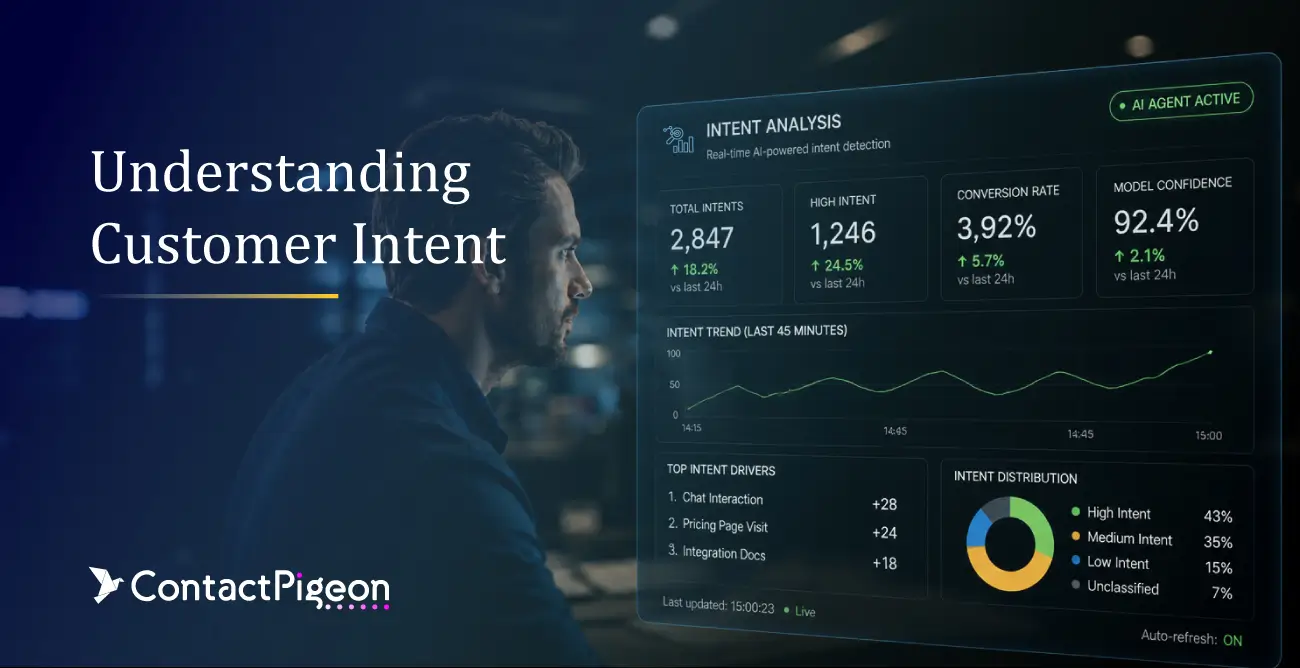
Retail is moving through one of the more disorienting shifts of the past decade. Highlighted in the retail predictions for 2026, shopping is leaving the browser for the conversation: a shopper describing what they want to an AI agent inside ChatGPT or Gemini bears little resemblance to a shopper scrolling a category page. Most of the infrastructure retailers built to understand customers was built for the second kind of shopper, and it’s the first kind that’s growing fastest. That gap is exactly where AI agents in retail run into trouble: an agent only understands a customer as well as the data feeding it does.
That’s the deeper story here. AI agents don’t come pre-loaded with customer understanding; they inherit whatever the retailer already knows and act on it as though it were the whole picture. The real subject of this moment is the data feeding that agent, and whether it can keep pace with what’s being asked of it.
Here’s the arc worth tracing: segments, the static filters retailers have relied on for two decades, are giving way to signals, a live read on what a customer is doing right now. What separates retailers whose AI agents actually understand shoppers from those whose agents guess is rarely the sophistication of the agent itself; it usually comes down to whether the customer data platform underneath was already turning behavior into signals before the agent arrived. That’s what this piece maps out: what changes when a CDP is built for signals rather than segments, and what to check for if you’re deciding whether yours is ready.
- AI agents are only as effective as the customer data feeding them. Their ability to understand a shopper depends on the quality, depth, and timeliness of the information available to them.
- Retailers have traditionally relied on customer segments. These static, periodically refreshed profiles describe who a customer is, but they do not capture what that customer is doing in the moment.
- AI agents need real-time and predictive signals. Live behavioral data shows what a shopper is doing now, while predictive scores indicate where that intent is likely to lead next.
- A customer data platform creates the signal layer agents need. It captures intent from anonymous visitors, unifies activity across sessions and devices, and activates those signals across every channel the agent uses.
- AI agents that appear to understand shoppers usually rely on an existing CDP foundation. In most cases, the platform was already collecting, connecting, and interpreting customer behavior before the agent was introduced.
What does it mean for an AI agent to “understand customer intent”?
Customer intent is the goal behind a shopper’s actions: what they’re trying to do right now, not who they are demographically. An AI agent understands intent when it can read those actions and the surrounding context in real time and choose a relevant next step, whether that’s the right product, the right answer, or the right moment to bring in a human.
Retailers have spent two decades getting good at identity: who a shopper is, which segment they fall into, what they bought last year. Intent moves on a different axis entirely, and it shifts by the hour. Three types show up across most shopping journeys: informational browsing, comparison and consideration, and high purchase intent. The same person can move through all three inside a single week. Monday’s researcher becomes Thursday’s buyer, and a system built to track identity alone has no way to tell the two apart.
Why customer intent is getting harder to see in the age of AI agents
The urgency here isn’t theoretical. Capgemini’s 2025 consumer trends report surveyed twelve thousand consumers across North America, Europe, and Asia-Pacific and found that 58% had already replaced traditional search engines with generative AI tools for product recommendations, up from roughly a quarter of shoppers two years earlier, and 71 percent said they want generative AI built into their shopping experience going forward. Morgan Stanley puts real numbers behind that shift: agentic shoppers, AI agents that shop on a customer’s behalf, could drive somewhere between $190 billion and $385 billion of US e-commerce spending by 2030, a fifth of the market at the high end.
The uncomfortable part for retailers is what that shift does to visibility. When discovery, comparison, and consideration happen inside someone else’s AI agent, a retailer’s own behavioral data often doesn’t start until add-to-cart. The browsing, the hesitation, the refined preferences – all of it happens off-site, invisible to the systems retailers built to read it. Attribution breaks down. Personalization has nothing left to personalize against. Brands risk becoming interchangeable at exactly the moment a shopper is deciding between them. The paradox of agentic commerce is that the more shopping moves into AI, the less retailers see of it, unless they own the surface where the signals are still theirs to capture.
How customer understanding is changing
That distinction between identity and intent is exactly where segments run into their limit. A segment is built on a cycle: a batch job runs, a customer gets sorted, and that sorting holds until the next refresh, often weeks out. A signal has no such cycle, and it changes the moment behavior does.
The gap shows up clearly with two shoppers who land in the same segment. One views a pair of running shoes once, showing mild interest. The other views the same pair three times, opens the size guide, adds it to cart, and waits for a price drop. A segment can’t tell them apart until its next scheduled refresh, by which point the second shopper may already have bought elsewhere. A signal catches the difference the moment it happens, and an AI agent in retail sitting on top of it can act on it immediately instead of waiting for the data to catch up.
What a CDP actually does to turn behavior into intent signals
A customer data platform earns its place here by running one specific loop, and naming it matters because this is where behavior actually becomes something an agent can use. Capture, unify, enrich, activate, learn: each stage takes raw activity and leaves it more usable than it found it. The detail worth noticing is how early the loop starts. A CDP captures high-intent behavioral signals before a shopper ever signs in, so the intent exists in the system before identity does.
The table below breaks down what each stage in that loop does, and why it matters to an AI agent in retail trying to read intent instead of just history.
| Stage | What happens | Why it matters for intent |
|---|---|---|
| Capture | Collect behavioral, transactional, engagement, and product-interaction data across channels. | Intent lives in actions: product views, search terms, cart events, dwell time, recency, and frequency. |
| Unify | Stitch anonymous and known behavior into one profile across sessions and devices. | Intent is continuous; a profile that resets every session cannot read it. |
| Enrich | Layer predictive signals such as churn risk, lifetime value, next-purchase timing, and affinity. | Turns raw behavior into forward-looking intent, rather than simply recording what has already happened. |
| Activate | Make signals usable in real time across every channel, from onsite personalization and email to AI agents in retail. | A signal only matters if something can act on it before intent decays. |
| Learn | Feed outcomes back into segmentation and predictive models. | Intent reading improves with every interaction. |
The types of intent signals a CDP captures
The loop above runs across several distinct kinds of signal, and keeping them separate, rather than folding them into one profile, is what keeps an intent read sharp instead of blurry.
| Signal type | Examples | What it reveals about intent |
|---|---|---|
| Behavioral | Product views, search queries, cart actions, wishlist activity, recency, and frequency. | Active, in-session intent. |
| Value | Order history, average order value, lifetime value, and discount sensitivity. | How much the intent is worth and how the customer should be treated. |
| Lifecycle | New, repeat, loyal, or at-risk customer stage. | Where the intent sits within the customer relationship. |
| Predictive | Churn probability, next-purchase window, expected spend, and product affinity. | Where the intent is heading. |
| Contextual | Last page or product viewed, entry point, device, and session path. | The circumstances the agent should respond to. |
How intent signals reach and improve an AI agent’s decisions
In practice, that sharper context turns into decisions an AI agent in retail has to make constantly: which product to surface, which question to ask, when to lead with reassurance versus urgency, and when to step back and bring in a person. Go back to the running shoe example. An agent that knows this particular shopper is a thrice-returning, size-guide-checking, price-watching visitor can lead with real-time availability and a targeted incentive instead of generic browsing help. The same sharper picture also tells the agent when to step back.
For trustworthy retail AI agents, handing off to a human is part of good intent-reading, not a failure of it. A well-designed agent recognizes when intent is sensitive, complex, high-value, or stuck, and knows to bring in a person at the right moment rather than pushing for containment at all costs.
Segments vs. signals vs. predictions: What’s the difference?
Segments, signals, and predictions aren’t interchangeable ways of saying the same thing; each answers its own question, on its own clock. A modern CDP runs all three together: an AI agent in retail uses signals to act, predictions to prioritize, and segments for context. The breakdown below shows what each one is actually built to answer.
| Type | What it answers | Time horizon | Example |
|---|---|---|---|
| Segment | Who is this customer? | Static, periodic | “Loyal, high-value customer” |
| Signal | What is this customer doing now? | Real-time | “Viewed this product three times today, with no cart action” |
| Prediction | What is this customer likely to do next? | Forward-looking | “72% likely to churn within 30 days” |
How to make your customer data “agent-ready”
A short, practical list worth working through before the next AI agent conversation:
- Unify first-party data into one profile, behavioral, transactional, and engagement, including anonymous-to-known stitching.
- Capture signals, not just outcomes: product views, search terms, category engagement, cart and wishlist activity, not only sessions and completed purchases.
- Enrich product data, attributes, availability, margin, relationships, since an agent can’t map intent to the right product without rich, structured product context.
- Give every predictive signal you already have a decision threshold: a churn score only matters if something specific happens at 70 percent versus 30. Otherwise it sits in a dashboard instead of reaching the agent.
- Set a freshness limit for every signal type. A cart abandonment from ten minutes ago and one from three days ago shouldn’t trigger the same response, decide the cutoff before the agent has to guess at it.
- Define escalation paths in advance, deciding which kinds of intent should route to a human.
- Measure signal quality directly: identity match rate, event completeness, profile completeness. Agents inherit whatever blind spots the underlying data already has.
What retailers get wrong about AI agents and intent
Get that list right and you head off most of what follows. A handful of mistakes account for nearly everything that goes wrong when it isn’t.
- Treating the agent itself as the intelligence is the most common one. The agent is a consumer of intelligence, whereas the data layer underneath it is the actual intelligence.
- Assuming more data automatically means more understanding is a close second, because disconnected data can’t provide context. Unification is what turns volume into something usable.
- Reading anonymous traffic as ‘no intent’ is a costly misread. Requiring identification before the agent responds means losing exactly the window, the third product view, the size-guide check, where intent is at its clearest.
- Optimizing purely for containment is a losing trade. A shopper who stays in the conversation but leaves without resolution costs more than one handed off early would have.
- And ignoring the off-site signal gap is the most strategically expensive mistake of all. If discovery is increasingly happening inside someone else’s AI, a retailer’s own surfaces are where first-party intent can still be captured directly. That’s exactly where the investment belongs.
How ContactPigeon helps retailers turn behavior into agent-ready intent
ContactPigeon unifies behavioral, transactional, and engagement data into a single retail-ready profile, capturing high-intent signals from the moment a shopper arrives, well before they ever sign in. From there, the platform turns that unified data into the live segments and signals an agent actually needs, activated across every channel a retailer runs, not just the one where the agent conversation happens.
Menura AI is the agent that sits on top of that layer: trained on the catalog and on the same customer signals, reading intent, guiding discovery, answering hesitation-driven questions, and handing off to a person exactly when the moment calls for it. It goes further than consuming the intent layer: it extends it directly into the conversation, turning what the CDP already knows into guidance at the exact moment a shopper is deciding.
What is the difference between a segment and a signal?
A segment is a static classification, built and refreshed periodically, that answers who a customer is. A signal is a live read on what a customer is doing right now. AI agents in retail need signals to act in real time; segments alone only tell an agent who someone was.
Can an AI agent read customer intent before a shopper signs in?
Yes. A CDP captures behavioral signals from anonymous visitors, including product views, search terms, and cart activity, so intent often exists in the data before a shopper ever logs in.
What makes customer data “agent-ready”?
Agent-ready data is unified across sessions and devices, captures signals rather than only outcomes, includes predictive scores such as churn risk and next-purchase timing, and can be activated in real time across every channel the agent uses.
Should an AI agent avoid handing off to a human?
No. Handing off at the right moment, when intent is sensitive, complex, or stuck, is a sign of effective intent reading. Optimizing purely for containment can cost more than an early handoff would have.
What is the most common mistake retailers make with AI agents in retail?
The most common mistake is treating the agent as the source of intelligence. The agent consumes intelligence; the CDP underneath it is what turns customer behavior into signals the agent can use.
Final thoughts
Retail has already moved into a world where shoppers describe what they want to an agent instead of clicking through category pages to find it. AI agents in retail will only ever understand that shopper as well as the data underneath them does. Whether AI in retail delivers or disappoints comes down to exactly that question.
A few things worth carrying forward:
- Segments answer who, signals answer what right now, predictions answer what’s next. Retailers working with only the first are handing an agent a fraction of what it needs.
- A CDP earns its place by running one loop, capture, unify, enrich, activate, learn, and every stage is where an agent-ready signal actually gets made.
- Anonymous doesn’t mean unreadable. Some of the clearest intent shows up before a shopper ever logs in.
- Containment isn’t the goal. An agent that hands off well, at the right moment, is doing its job better than one that never lets go.
If you’re checking whether your own data is agent-ready rather than just agent-adjacent, that’s worth walking through together. Book a demo and we’ll show you how ContactPigeon’s CDP feeds Menura AI a genuinely live read on intent, not just a name and a segment.