Valentine’s Day remains one of the most commercially significant retail opportunities each year, reinforcing its importance into 2026. According to the National Retail Federation’s annual consumer survey, U.S. Valentine’s Day spending is projected to reach a record $27.5 billion, reinforcing the scale highlighted in our Valentine’s Day statistics report, surpassing last year’s $25.8 billion and edging past the previous high set in 2020. Total consumer participation is also rising, with 56 % of shoppers planning to make purchases for Valentine’s Day, up from 53 % in 2024, and average spend at approximately $188.81 per person. As this high-intent demand concentrates into a short timeframe, AI in retail becomes increasingly important for helping customers find the right products quickly and with confidence, directly influencing conversion and revenue during this critical period.
- Valentine’s Day concentrates high-intent demand, making relevance and decision support directly tied to conversion and revenue.
- AI in retail performs best when it reduces uncertainty through guided personalization that narrows options and builds confidence.
- AI agents interpret real-time intent signals such as budget sensitivity, urgency, and gifting context to guide shoppers toward the right choice.
- Impact shows across the funnel, including improved conversion quality, higher average order value, and shorter time-to-purchase.
- What works for Valentine’s Day scales across other gifting moments and high-consideration categories, positioning AI agents as long-term revenue infrastructure.
- Menura AI enables this model in practice by combining real-time reasoning, product intelligence, and customer context to deliver guided personalization at scale.
Trends shaping Valentine’s Day 2026: Why is it a high-stakes moment for AI in retail?
Valentine’s Day campaigns remain one of the most commercially relevant topics in retail, making a strong Valentine’s Day marketing strategy for retail essential, with clear implications for how experiences must perform. Key trends shaping Valentine’s Day in 2026 include:
- Compressed spending window: Valentine’s Day drives multi-billion-dollar retail spend within a short timeframe, with strong demand across jewelry, personal care, flowers, and dining. Small experience improvements can have outsized revenue impact.
- High-intent purchasing behavior: Shoppers arrive with clear goals, limited time, and emotional context, increasing sensitivity to friction and irrelevant messaging.
- Rising expectations for personalization: Consumers increasingly seek meaningful, tailored gifts and curated experiences rather than generic promotions or static gift guides.
- Earlier discovery and planning: Search and shopping activity begins weeks in advance, especially across email and ecommerce touchpoints, as visualized in our Valentine’s Day email marketing infographic, and peaks just before February 14, making early engagement and smooth discovery critical.
- Broad category relevance: Valentine’s Day influences performance beyond traditional gifting, affecting fashion, beauty, wellness, and experience-based retail.
How can AI agents guide shoppers through Valentine’s Day purchase decisions
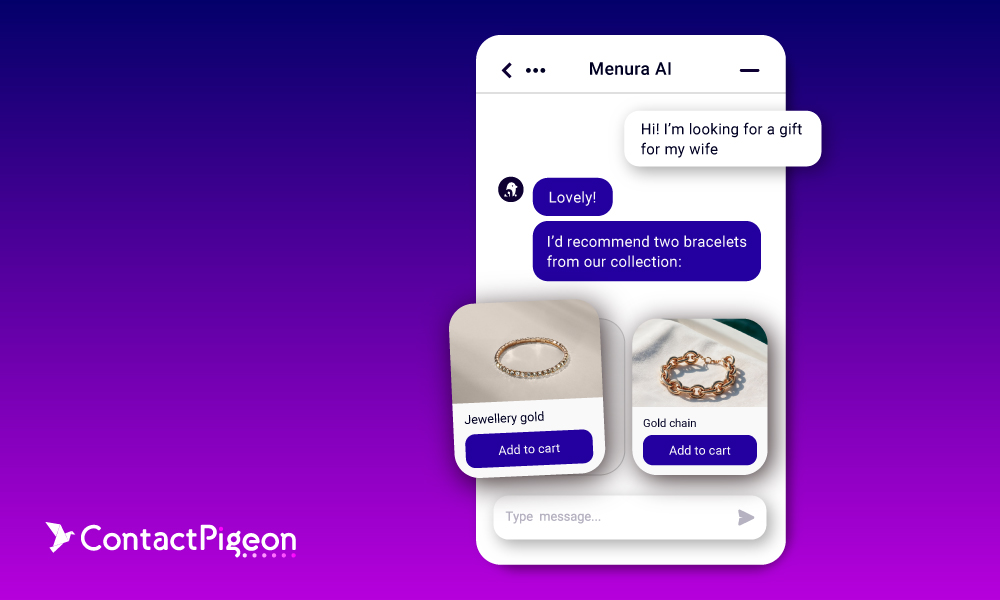
AI agents are quickly evolving from experimental tools to core drivers of personalized commerce, helping retailers interpret individual context and guide customers toward purchase decisions that feel relevant, timely, and confidence-inspiring.
AI in retail interprets relationship context, budget sensitivity, time pressure, and compatibility
AI agents process multiple dimensions of customer signals in real time:
- Relationship context: AI can infer intent from browsing behavior or queries (e.g., “gifts for partner after 3 years”), weighting recommendations toward meaningful categories and price points.
- Budget sensitivity: Agents dynamically tailor suggestions based on signals like price filters and click patterns, automatically highlighting items within a customer’s spending range (“Best gifts under €50,” for example).
- Time pressure: Valentine’s Day marketing imposes a compressed decision window. AI agents monitor real-time engagement patterns and may surface options most likely to convert quickly, for instance, highlighting same-day delivery options or curated sets that are ready to buy.
- Product compatibility: Advanced AI systems integrate deep product data (attributes, reviews, inventory) with shopper context to propose compatible gifts that reflect intent without overwhelming choice. This creates a guided exploration rather than a static shortlist.
Examples of guidance shoppers might receive
AI agents can shape the journey in ways that feel personalized and intuitive. Each of these examples reflects interpretation of multiple data layers, not just past purchases, but real-time engagement and inferred intent, to help narrow choices efficiently.
- “Top Valentine’s gifts under €50 for someone celebrating their first Valentine’s together”
- “Popular gift bundles for long-term partners based on past engagement and preference profiles”
- “Last-minute Valentine’s options with express delivery available today”
What guided personalization really means
Guided personalization with AI agents is not:
- A static recommendation list based solely on historical data
- A scripted, rule-based flow that pushes manual segments
Instead, it is continuous, context-aware adaptation that evolves with how the shopper interacts in real time. AI shopping agents observe, interpret, and respond with tailored recommendations, adjusting guidance as intent becomes clearer. This enables personalization that feels modern, responsive, and suited to high-intent events like Valentine’s Day. Real-world trends show this shift: retailers are actively piloting or deploying agentic AI to support personalized experiences, and a meaningful share expect strong impacts from these technologies as they mature.
AI in retail personalization that actually drives Valentine’s Day revenue

Artificial intelligence personalization is now a measurable revenue driver, especially during high-intent retail moments like Valentine’s Day.
AI in retail lifts key revenue metrics
Industry benchmarks indicate clear performance improvements when AI personalization is in place:
- Conversion rates: Personalized AI-driven experiences can lift conversion by double digits. Machine-learning-enabled personalization is forecast to increase retail conversion rates by +10–30%.
- Average order value (AOV): AI recommendation engines commonly increase AOV by +5–15 % through effective upsells and complementary suggestions.
- Repeat purchases: AI systems that operate dynamically, instead of batch rule sets, can deliver +20-25% repeat orders.
Why emotional occasions respond to confidence-building guidance
On emotionally charged occasions, customers seek reassurance just as much as relevance. Personalization that understands context, whether budget, relationship stage, or timing, helps reduce anxiety during decision making:
- Guided suggestions reduce “paralysis by analysis” by narrowing focus to appropriate, relevant gift sets.
- Confidence boosts conversion when guidance implicitly says “This choice matches your needs.”
Reinforcing urgency and reassurance
Urgency can increase purchase velocity, but only if coupled with reassurance that the choice is right. AI personalization plays both roles:
- Dynamic urgency signals (limited stock, delivery windows) prompt timely action.
- Reassurance messaging (based on preferences and intent) reinforces confidence.
Where AI agents create the most impact across the Valentine’s Day journey

AI agents are most effective when deployed strategically across the retail funnel — not just at checkout. Below are the stages where they deliver measurable wins for Valentine’s Day:
Discovery: Reducing gift paralysis
Gift paralysis happens when customers cannot narrow down options quickly. The value is reduced bounce rates, higher engagement depth, and larger percentage of sessions converting. Conversational commerce in retail use real-time signals to:
- Surface relevant collections based on inferred context (e.g., relationship stage, past browsing)
- Rank options according to relevance and urgency
Consideration: Comparing without friction
During the consideration phase, customers refine preferences. AI agents help by:
- Presenting side-by-side comparisons tailored to the shopper
- Highlighting why specific options fit the customer’s context (e.g., budget, occasion nuance)
- Simplifying trade-offs with concise, adaptive guidance
Checkout: Removing last-minute hesitation
AI agents can mitigate cart abandonment, one of the biggest leakage points in Valentine’s Day shopping. They do this by:
- Proactively suggesting last-minute assurances (delivery cutoff times, return policies)
- Offering real-time accessory suggestions (wrapping, cards) that complement the primary gift
Post-Purchase: Reinforcement and upsell
This stage drives repeat engagement and deeper lifetime value, converting a seasonal purchase into ongoing loyalty. AI agents extend value by:
- Providing follow-up content (gift care, style tips)
- Suggesting complementary post-purchase add-ons (e.g., upgrade options, matching products)
Implementing Valentine’s Day AI marketing without rebuilding your stack
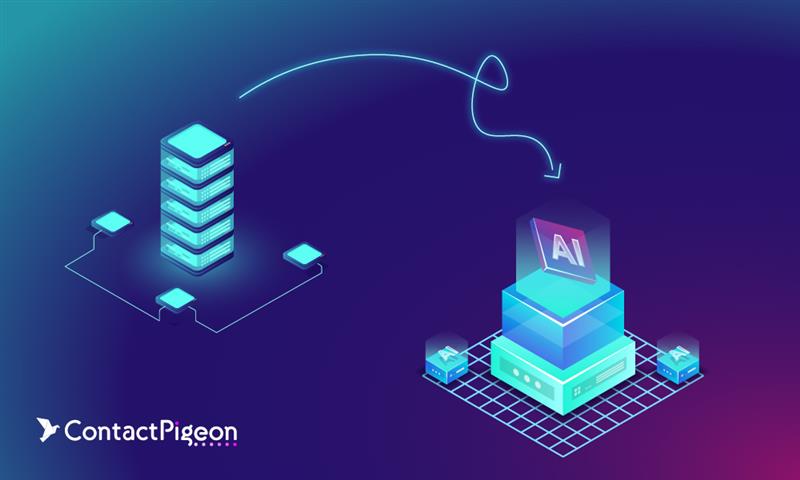
Executives often hesitate at AI adoption because of assumptions about disruption. However, modern AI agents can plug into existing retail infrastructure with minimal overhaul.
Where AI agents sit in the tech stack
AI agents do not require tearing down legacy systems; instead, they augment them with machine-learning engines and real-time decision layers.They leverage existing data layers including:
- Customer Data Platforms (CDPs) for unified profiles
- Product catalogs & taxonomy for structured relevance
- Behavioral signals from browsing and purchase history
AI in retail not a rip-and-replace initiative
Retailers can start with:
- Pilot integrations on high-impact pages (homepage, product detail)
- Recommendation APIs or AI augmentation layers that co-exist with current personalization
Common implementation mistakes
Even with strong intent, retailers can stumble if they treat AI agents as:
- Campaign delivery tools only: Using AI solely for one-off promotions limits long-term impact. Instead, agents should integrate into ongoing customer journeys.
- Automation without oversight: Over-automation can dilute brand voice. Each AI agent should be guided by brand-aligned rules and quality checks.
AI in retail eases governance and brand safety considerations
AI agents must operate under clear governance frameworks. This ensures trust, brand alignment, and regulatory compliance without slowing innovation.
- Data privacy and consent management
- Bias detection and mitigation in recommendation logic
- Transparency rules so customers understand why guidance is shown
Why Valentine’s Day is a blueprint for the future of AI in retail
Valentine’s Day reflects how customers increasingly shop across retail: with emotional intent, limited time, and high expectations for relevance. It provides a clear, repeatable environment to evaluate how AI agents support decision-making under pressure.
As a testing ground for AI in retail, Valentine’s Day demonstrates that guided commerce delivers value when it:
- Supports discovery by narrowing choices early
- Reinforces confidence as intent becomes clearer
- Adapts guidance in real time based on behavior and context
The same dynamics apply to other high-intent moments, including Mother’s Day, holiday gifting, and high-consideration categories such as beauty, fashion, and consumer electronics. What works during Valentine’s Day scales across the retail calendar.
How are AI agents different from traditional personalization tools?
AI agents adapt in real time to shopper behavior and context. They interpret signals as intent evolves and adjust guidance throughout the journey, rather than relying on static segments or fixed rules.
Why is Valentine’s Day a strong use case for AI in retail?
Valentine’s Day concentrates high-intent purchasing into a short window and adds situational complexity. AI agents help shoppers narrow choices and build confidence faster, improving conversion and reducing hesitation.
Can AI agents be implemented without replacing existing systems?
Yes. AI agents typically sit on top of existing infrastructure and use data from a CDP, product catalog, and behavioral signals. Many retailers start with targeted deployments on high-impact pages without rebuilding their stack.
How do AI agents influence revenue metrics during Valentine’s Day?
They improve decision efficiency. Faster, more confident choices increase conversion, relevant add-ons raise average order value, and timely reassurance reduces abandonment during high-pressure gifting moments.
How do AI agents maintain brand voice and experience quality?
AI agents operate within brand and governance controls. Retailers define tone, boundaries, and prioritization rules so guidance stays consistent with brand identity while adapting to customer context.
Are AI agents only useful for gifting and seasonal campaigns?
No. AI agents support everyday journeys and high-consideration categories year-round. Any scenario with complex choices, emotional context, or time sensitivity benefits from guided personalization.
Conclusion
Valentine’s Day highlights where traditional personalization falls short. Customers need clarity and confidence when decisions matter. AI agents enable a more effective model for AI in retail, one centered on guided personalization and real-time support. Retailers that invest in this approach improve performance across seasonal moments and everyday journeys alike.
Menura AI delivers this capability at scale, combining real-time reasoning, product intelligence, and customer context across discovery, consideration, and conversion. Book a demo or get early access to see how Menura AI supports guided commerce as part of a long-term revenue strategy.